Frequently Asked Questions
The most-asked questions about cellular biology.
What is cellular biology and why does it matter?
Cellular biology is the study of cells—their structure, chemistry, and behavior—as the fundamental units of every living organism. It is the foundational framework behind everything from how you digest a meal to how your immune system identifies and destroys an invader.
Who are the key figures a newcomer should know?
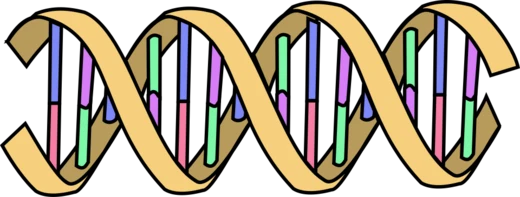
Robert Hooke coined the word 'cell' after peering through a lens in 1665, and Schleiden and Schwann formalized cell theory in the 1830s. On the molecular side, Watson, Crick, and Franklin are tied to the 1953 DNA double-helix model, while Doudna and Charpentier are celebrated for making CRISPR gene-editing practical.
Where should I start if I'm brand new to the field?
Begin with the three tenets of cell theory and the prokaryote-versus-eukaryote distinction, then work through the major organelles and the central dogma (DNA → RNA → protein). Once that scaffold is in place, the cell cycle, metabolism, and signal transduction become much easier to follow.
Which organelles are the most important to understand first?
The nucleus houses the genome, mitochondria produce the bulk of a cell's ATP, and the endoplasmic reticulum plus Golgi apparatus handle protein and lipid processing. Ribosomes, the plasma membrane, and the cytoskeleton complete the essential 'core cast' that appears in virtually every eukaryotic cell.
What is the 'central dogma' and why is it so central?
It describes the directional flow of genetic information: DNA is transcribed into messenger RNA, which is then translated into a functional protein. Nearly every downstream process—metabolism, signaling, division—depends on this three-step pipeline working correctly.
What are the most celebrated 'notable moments' in the field's history?
The 1953 determination of DNA's double-helical geometry is widely regarded as the field's defining breakthrough. Other landmark events include the cracking of the genetic code in the 1960s, the completion of the Human Genome Project in 2003, and the 2012 demonstration that CRISPR-Cas9 can be programmed to cut DNA at any chosen site.
What's the real difference between prokaryotic and eukaryotic cells?
Prokaryotes (bacteria and archaea) lack a membrane-bound nucleus and most membrane-bound organelles, whereas eukaryotes compartmentalize their interior with a nucleus, ER, Golgi, and other specialized structures. This single architectural divide drives nearly every difference in size, metabolic complexity, and reproductive strategy.
What is the cell cycle and why do people find it so compelling?
It is the ordered sequence of growth, DNA replication, and division (mitosis or meiosis) that a cell undergoes to produce two daughter cells. It is tightly choreographed by cyclins, kinases, and checkpoint proteins, making it feel like a multi-act story where every scene must resolve before the next one begins.
What are the biggest 'villains' or open challenges in cellular biology?
Cancer is the most prominent, representing a catastrophic loss of cell-cycle regulation and evasion of programmed cell death. Other major challenges include understanding prion-driven protein misfolding, how viruses hijack host-cell machinery, and the gradual decline of mitochondrial function linked to aging.
What is the endosymbiotic theory and why do fans love it?
It proposes that mitochondria and chloroplasts originated as free-living bacteria that were engulfed by an ancestral host cell and eventually integrated as permanent, mutually beneficial partners. It is a fan favorite because it reframes the organelle 'cast' as the product of ancient collaboration rather than top-down engineering.